

Behavioral Data at Work
The Impact of Using Structured Behavioral Data to Monitor the Indianapolis Zoo’s Dolphin Pod
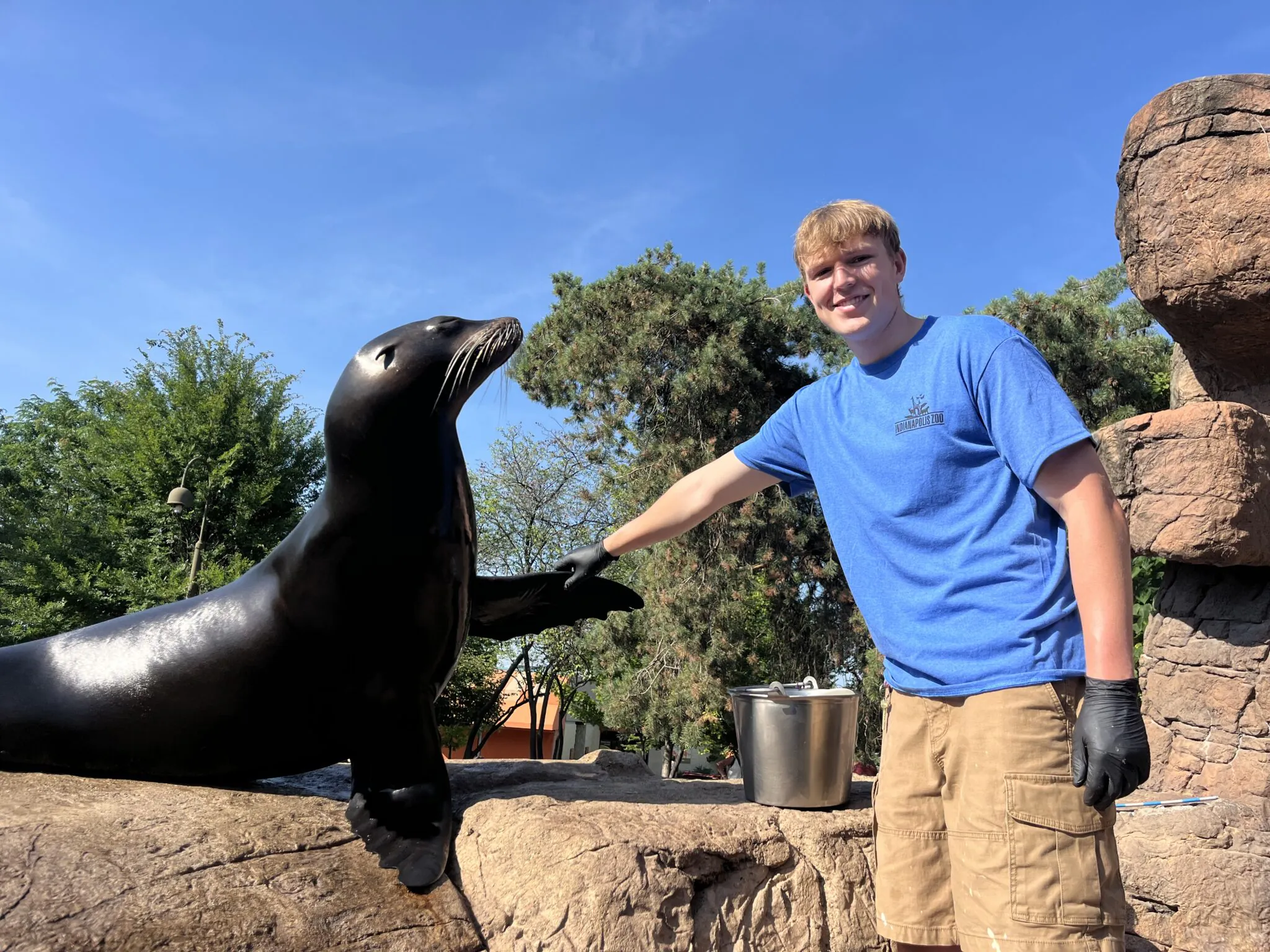
This summer I had the chance to work with the Marine Mammal Team at the Indianapolis Zoo, and it became one of the most meaningful experiences of my life. I spent my internship developing a Dolphin Social Monitoring System that helps staff better understand how Atlantic bottlenose dolphins interact with one another throughout the day. The project allowed me to combine my passion for marine mammals with real behavioral science, and it gave me a clearer picture of the kind of work I want to pursue in the future.
The idea behind the project was simple: dolphins are incredibly social animals, and their relationships play a major role in their daily lives. Trainers see these social interactions during sessions, but there is so much happening outside of those moments. My goal was to create a structured way to observe and record social behavior, the use of space and group dynamics so staff could have a better understanding of what the dolphins are doing when no one is actively working with them.
To do this, I built a customized ethogram system using the platform ZooMonitor. An ethogram is a list of behaviors that observers can use to record what an animal is doing. By keeping the categories consistent, the data stays organized and easy to compare over time. I focused on three dolphins who often influence the rest of the group: Jett, Kimo and Nova. These three have strong personalities and play a major role in shaping the social tone of the pod. When one of them moves to a different part of the habitat, the rest of the group often responds. Sometimes the pod follows, and sometimes the dolphins choose to avoid that area entirely.
During each observation session, I watched the dolphins for 10 minutes and recorded what each of the three focal animals were doing every minute. I noted their behavior, who they were interacting with and where they were located in the habitat. Over time, the data revealed clear patterns. Jett, Kimo and Nova often spent time together and positioned themselves wherever they wanted in the habitat. I saw consistent space use patterns as a result. Certain areas of the habitat were preferred during calm moments, while other areas were used when the dolphins wanted more distance from one another.
One of the most interesting observations was seeing how individual dolphins influenced the group. Some dolphins were more likely to swim together, while others preferred to stay on their own. Some dolphins even avoided specific individuals. All these choices shaped the overall movement of the pod. By collecting this information, I was able to create a clear picture of how the dolphins interact and how their relationships shift throughout the day.
The system I built gives staff a way to track these patterns over time. It helps identify moments of social tension, calm and relationship changes that might be important for welfare decisions. It also creates a foundation that future interns and staff can continue using. The system can be adapted for enrichment tracking, medical observations or even environmental changes. For example, when the five dolphins from Miami are integrated with the pod, this system can monitor who they are interacting with and where they land on the hierarchy.
Working on this project taught me about the powerful impact that structured behavioral data can have in an animal care setting. It showed me how technology can support better welfare, teamwork and decision-making. It also gave me a deeper appreciation for the work that marine mammal trainers do every day. Trainers care for animals who are intelligent, emotional and socially complex, and having tools that help them understand those social dynamics can make a real difference.
This internship also helped shape my future goals. I want to pursue a career working with marine mammals and supporting their role in conservation. Dolphins and other marine species face many challenges in the wild, and understanding their behavior is an important part of protecting them.
My experience at the Indianapolis Zoo showed me how much can be learned through careful observation and how those insights can support both animal welfare and conservation efforts. I hope to continue building skills in behavioral research and animal care so that I can contribute to the protection and understanding of marine mammals throughout my career.
I am grateful for the guidance and support I received from the Indianapolis Zoo’s Marine Mammal Team. They welcomed me into their world, taught me how to observe with purpose and encouraged me to think creatively about how data can help animals. This project was only one part of my summer, but it is a part that will stay with me for a long time. I am excited to continue learning, growing and working toward a future where I can help marine mammals and support the conservation work that is so important for their survival.