

Wild Futures Grants
Our Mission
The Indianapolis Zoo’s mission is to protect nature and inspire people to care for our world. A cornerstone in advancing that mission is the Zoo’s support of conservation activities that protect species (plants, animals and fungi) and ecosystems. The Zoo extends its reach through financial support and collaborative involvement with various organizations, researchers and conservationists. Their dedicated work aims to safeguard unique species and their environments for the benefit of future generations.
Questions about the grants should be directed to [email protected].
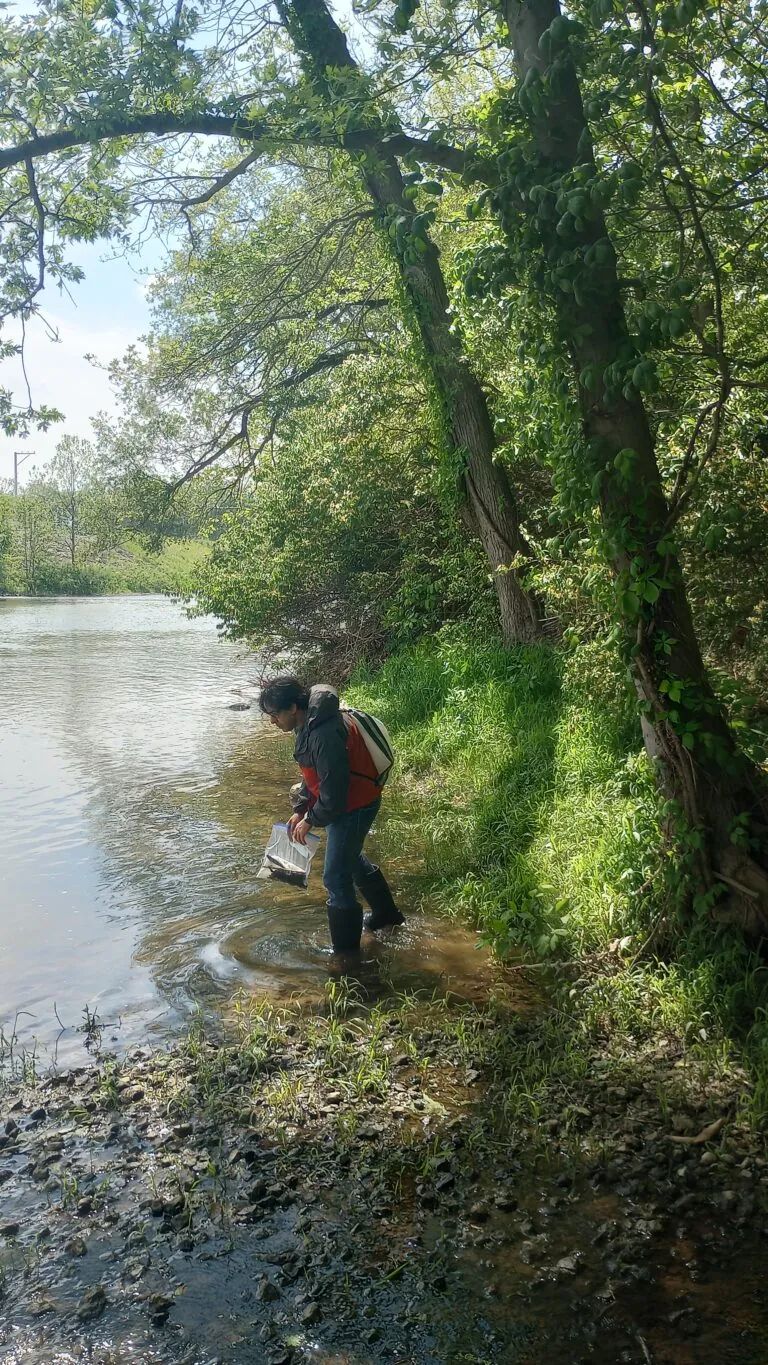
Each year, the Indianapolis Zoo distributes Wild Futures: Small Conservation Grants to support students and early-career professionals, helping them get started on projects that advance conservation.
The value of even small grants can help conservationists build momentum early in their careers and lay the foundation for long-term conservation projects.
These one-time awards are open to all applicants affiliated with a non-profit, government agency, university or a foreign not-for-profit equivalent. The Zoo does not offer conservation grants to unaffiliated individuals.
Wild Futures awards up to $5,000 to projects from any part of the conservation process, from species discovery or rediscovery to species assessment, planning and action, as well as communication and networking.
Questions about the grants should be directed to [email protected].
New Conservation Grants Portal
As of May 2026, the Indianapolis Zoo has adopted a new grants portal for all its conservation grants. The new system, YourCause from Blackbaud, will process all grant applications moving forward.
YourCause from Blackbaud includes helpful features that improve the overall grant process. Applicants with an existing Blackbaud account may use that login information. First-time users will create a new Blackbaud ID (instructions below).
What You Need to Know
-
All new grant applications must be submitted through the updated grants portal, which requires a Blackbaud ID.
- Please bookmark the portal link to access and manage any applications submitted on or after May 05, 2026.
- To support collaboration, applicants and grantees are encouraged to add additional contacts to their applications.
- Please add [email protected] AND [email protected] to your safe sender’s list. All communications regarding applications will be distributed via the Blackbaud system. Failing to add these addresses to your safe sender list may result in the information going to spam folders.
Creating an Account
- Create a new account using these instructions. After you have made your account, you will be taken to the Wild Futures application.
- You only need to create an account once. You will use it to apply for all future conservation grants from the Indianapolis Zoo. Once you have a primary applicant on the application, they can add applicants to the application. Those added applicants can create a unique Blackbaud login USING THE SAME EMAIL ADDRESS THAT WAS INCLUDED BY THE PRIMARY APPLICANT in the “Manage Applicants” menu. This allows collaboration on a single application without sharing accounts.
2025 Grant Recipients
- Act for Sustainable Actions ACT4SA (Benin)- Strengthening the resilience of local communities and the conservation of the White-Bellied Pangolin in the Hlanzoun swamp forest – $5000
- Biodiversity Research and Conservation Foundation (India) – Safeguarding the Critically Endangered Dehradun Stream Frog through participatory research, community engagement, and education – $4900
- Freshwater Research Centre (South Africa) – Rewilding South Africa’s endangered Clanwilliam sandfish: Scaling up conservation releases for population recovery – $4770
- Gulf of Guinea Biodiversity Centre (São Tomé) – Forest Tales: voices for mollusc conservation in endemic-rich islands – $4950
- Howard University (Nigeria)- Understanding the Distribution and Conservation Status of Critically Endangered Niger Stingray in Nigeria – $5000
- Leibniz Institute of Freshwater Ecology and Inland Fisheries (Cuba) – Silent Extinction in the Caribbean? Investigating the Fate of the Cuban Blue – $5000
- RodentPlus Conservation Initiative (Nigeria)- Conserving Praomys obscurus: Understanding population status, threats, and community engagement in Nigeria – $5000
- The Nature Conservancy (Palmyra Atoll) – Tracking post-release survival, health, and behavior following first wild releases of the Extinct in the Wild Guam sihek – $5000
- Zoological Society of London (Kenya)- Applying the IUCN Assess to Plan Framework to tropical Swallowtail butterflies – $4976
- Zoological Society of London (French Polynesia) – Small but mighty: Strengthening Partula Snail Conservation through Rescue, Revitalisation and Release – $5000