

Wild Matters
A Conservation Publication of the Indianapolis Zoo
FIELD NOTES FROM INDIA
CONSERVATION AT THE SCALE OF PEOPLE
Nico de Bruyn, Ph.D., Vice President of Conservation and Education & Director of the Global Center for Species Survival
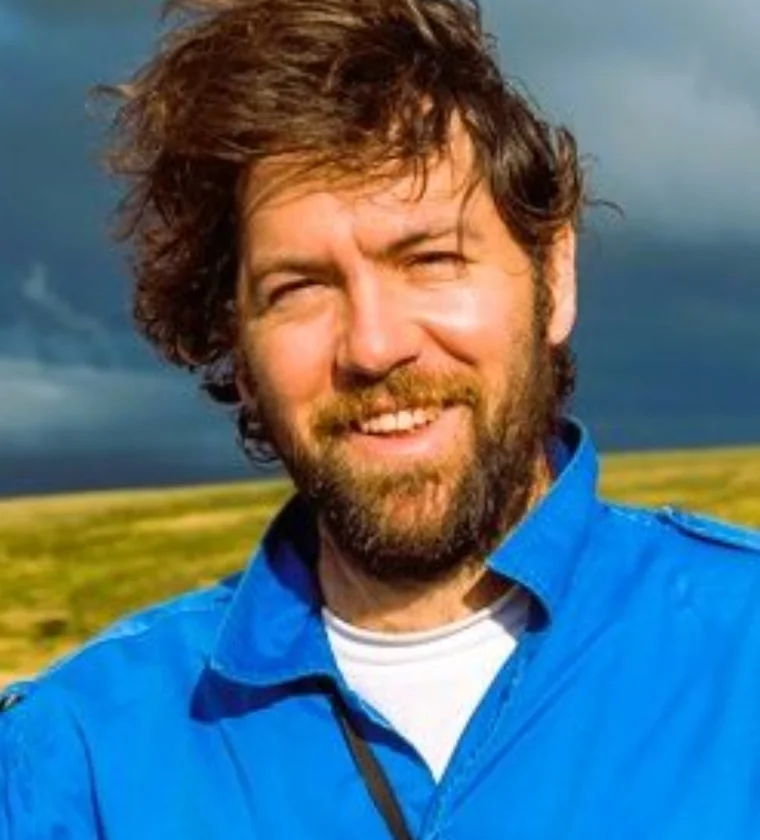
Conservation challenges may be similar around the world, but the contexts in which they occur can be dramatically different.
My recent visit to India combined meetings with the Wildlife Trust of India (WTI) and the IUCN Species Survival Commission Chair’s Office, led by Vivek Menon, with the opportunity to experience firsthand how one of the world’s most biodiverse nations approaches conservation. Discussions focused on strengthening collaboration, including cooperation between the Global Center for Species Survival, the IUCN SSC and partners in India. As valuable as those conversations were, many of the most important insights came from time spent in the field.
Traveling through Delhi, the Sultanpur National Park and the Bandhavgarh Tiger Reserve highlighted something difficult to fully appreciate until you experience it directly: the sheer scale and density of people. Wildlife conservation in India operates alongside vast human populations and across a range of socio-economic realities. To many outside observers, it might seem unlikely that wildlife could persist under such conditions.
Yet some species do more than persist.
Bandhavgarh offers a great example of what sustained conservation investment, committed management and broad public support can achieve. The emphasis on coexistence is clear. Across the areas I visited, there appeared to be a deep cultural and philosophical respect for life that influences how people relate to wildlife. While not removing conflict or challenges, it contributes to an environment where conservation can take root and endure.
At the same time, conservation success is neither complete nor guaranteed, as wildlife in India faces very real pressures from habitat loss, human-wildlife conflict, development and illegal activity. Organizations such as WTI play a vital role by working across these interconnected challenges, adapting approaches as circumstances change and helping ensure that conservation remains both practical and effective.
Of course, India harbors more than impressive wildlife. I have always had a deep appreciation for history and culture, and I could not pass up the opportunity to visit sites such as the Taj Mahal in Agra and the remarkable Qutb Minar in Delhi. I also managed to attend an Indian Premier League cricket match, providing a memorable glimpse into another side of modern India.
The visit reinforced that successful conservation is about building the institutions, partnerships and social support that allow both people and wildlife to thrive together. India’s experience offers a powerful reminder that even in the most densely populated landscapes, conservation can succeed when it is woven into the fabric of society itself.
Nominees Announced for the Indianapolis Prize
 The World’s Leading Award for Animal Conservation
INDIANAPOLIS – Across every continent, conservationists overcome the odds to protect species on the brink of extinction. Today, the Indianapolis Zoo announces 27 of these conservationists as nominees for the Indianapolis Prize, the world’s leading award for animal conservation.
Entering its third decade of impact, the Indianapolis Prize – co-chaired by Jeffrey A. Harrison, president and CEO of Citizens Energy Group, and Suzanne Fehsenfeld, founding member of the Indianapolis Zoo – recognizes the world’s most extraordinary scientists and researchers by rewarding individuals who work to prevent extinction and shape the future of the planet.
Skilled deliberation committees will narrow the list of 27 conservationists down to six DeHaan Finalists. One of those Finalists will be named the Winner of the Indianapolis Prize and receive a $300,000 award to accelerate proven, high-impact work for species survival.
“These nominees represent the best of the best in conservation efforts. They are all highly regarded in their professions, and the Indianapolis Zoo is honored to amplify their conservation efforts through the Indianapolis Prize,” said Jake Oakman, senior vice president for Zoo External Relations.
The 2027 Winner will be announced at the Indianapolis Prize signature event on Sept. 25, 2027. Sign up to be notified about the Indianapolis Prize, DeHaan Finalists, the Emerging Conservationist award and more.
The Nominees for the 2027 Indianapolis Prize are:
Alvaro Velasco Barbieri (Universidad Central de Venezuela, Venezuela)
Researcher working on the recovery and conservation of crocodiles in Venezuela and throughout Latin America. His work supports training biologists, park rangers, national guards and personnel from local, regional and national ministries and organizations.
Reiner Beutel, Ph.D. (Fischer Maschinenbau/World Rotor, Germany)
Businessman developing mechanical/pneumatic devices to reduce insect and arthropod mortality in grass mowing equipment. The Fischer Ecocut system by Fischer Maschinenbau is manufactured and marketed as an insect-flushing system attachment for tractor-mounted flail mowers and roadside maintenance equipment designed to protect biodiversity.
Stuart Butchart, Ph.D. (BirdLife International, UK)
Scientist who led the development of the Red List Index, an indicator of biodiversity loss now used by the United Nations and governments worldwide to track progress towards global goals on biodiversity conservation and sustainable development. He also has developed innovations in methods for assessing extinction rates and research on protected areas as well as climate change impacts on biodiversity.
Einar Topiltzin Contreras-MacBeath, Ph.D. (Universidad Autónoma del Estado de Morelos, Mexico)
Conservationist instrumental in assessing more than 1,150 freshwater fish species from Mexico and Central America for the IUCN Red List, he has spent 40 years studying the species as well as coordinating management plans and protected areas to ensure legal protections for wildlife refuges.
Lisa Dabek, Ph.D. (Woodland Park Zoo, USA)
Zoologist and founder of the Tree Kangaroo Conservation Program in Papua New Guinea, where she works with local Indigenous communities and area governments to establish conservation areas and plans for the species. She was previously recognized as a DeHaan Finalist for the Indianapolis Prize in 2025.
Sylvia A. Earle, Ph.D. (Mission Blue, USA)
Renowned oceanographer and two-time DeHaan Finalist for the Indianapolis Prize, this trailblazer for the world’s oceans continues to create a global network of marine protected areas she calls “hope spots.” She has spent more than 7,500 hours underwater, led more than 100 global ocean expeditions and still holds the record for the deepest untethered walk on the sea floor.
Ehab Khalil Abdul Rahim Eid (Independent Senior Advisor, Biodiversity and Conservation, Jordan)
Leads conservation efforts for threatened species and ecosystems across the Middle East, including the Aqaba Marine Reserve located at the northernmost tip of the Red Sea. This reserve safeguards more than 150 species of hard coral, over 500 species of fish and 1,000 species of mollusks.
Rachel Graham, Ph.D. (MarAlliance, Panama)
Marine conservation scientist restoring populations of threatened large marine species, with a focus on sharks and rays. Her pioneering research, blending traditional fisher knowledge with low-cost standardized science, has led to new species protections, protected area designations, fisheries reforms, alternative economies for fishers and reversals of population declines.
David F. Gruber, Ph.D. (Project Cetacean Translation Initiative, USA)
Scientist, communicator and inventor working to understand the acoustic communication of sperm whales. His research also covers biofluorescent and bioluminescent ocean organisms, which led to the discovery of the first biofluorescent sea turtle.
Rosamira R. Guillen (Fundación Proyecto Tití, Colombia)
Landscape architect and environmental designer-turned-conservationist who cofounded and leads the Fundación Proyecto Tití, an organization dedicated to the protection and conservation of one of Colombia’s most endangered native primate species: the cotton-top tamarin. She is a previous winner of the Whitley Award.
Axel Hochkirch, Ph.D. (Museum of Natural History, Luxembourg)
Invertebrate conservationist focused on grasshoppers both in his native Europe and around the globe. His work has resulted in 1,500 grasshopper species assessments through the IUCN Red List, the recovery of a couple of threatened species and the initiation of many new invertebrate conservation projects through the formation of IUCN SSC Specialist Groups.
Gladys Kalema-Zikusoka, DVM (Conservation Through Public Health, Uganda)
Wildlife veterinarian recognized globally for her work protecting endangered mountain gorillas in East Africa. She was previously recognized as a DeHaan Finalist for the Indianapolis Prize in 2023.
Laly L. Lichtenfeld, Ph.D. (African People & Wildlife, Tanzania)
Wildlife and social ecologist who co-founded African People & Wildlife and has spent nearly three decades developing and scaling community-led approaches to reducing human-wildlife conflict and protecting habitat. Her coexistence work has reduced livestock losses, crop raiding and retaliatory killings while protecting large carnivores, elephants and other species across 85 partner communities and more than five million acres in Tanzania.
Tania “Nena” Baltazar Lugones (Comunidad Inti Wara Yassi, Bolivia) – Pioneer for wildlife rescue and rehabilitation in Bolivia. She is transforming emergency animal confiscations – from illegal trafficking and poaching – into long-term species recovery and habitat protection.
Laurie Marker, Ph.D. (Cheetah Conservation Fund, Namibia)
Conservationist studying cheetah genetics, biology and behavioral ecology. Her community initiatives introduce livestock-guarding dogs to farmers in Namibia to reduce human-wildlife conflict. She is a two-time DeHaan Finalist for the Indianapolis Prize.
Roderic Mast (Oceanic Society, USA)
Marine biologist who serves as the Co-CEO and President of Oceanic Society and has worked for the past two decades to organize the world’s foremost network of marine turtle experts to set priorities for all seven species, which accelerated protection for Eastern Pacific leatherback and Kemp’s ridleys. The impact of his work and leadership is exemplified by the 2025 global down-listing of the green turtle from Endangered to Least Concern on the IUCN Red List.
Ronaldo Goncalves Morato, Ph.D. (Panthera, Brazil)
Conservation biologist and veterinarian working to conserve Brazil’s large-bodied mammal species with research focusing on reproductive biology, landscape ecology and applied outputs that inform policy and conservation planning. His work has led to the creation and expansion of protected areas in the Pantanal and secured wildlife corridors.
Citrakasih M. Nente, DVM (Sumatran Orangutan Conservation Program, Indonesia)
Conservation veterinarian with more than 25 years of experience in orangutan rescue, rehabilitation, veterinary management and reintroduction in Indonesia. Her work has contributed to the rescue and rehabilitation of more than 500 orangutans and supported the successful reintroduction of more than 330 individuals into protected forest ecosystems in Sumatra.
Paul Pearce-Kelly (Zoological Society of London, UK)
Invertebrate conservation leader who has brought the Partula snail back from extinction. This tropical snail species is native to French Polynesia and represents three decades of work by conservation zoos and the French Polynesian government to enable the recovery of this species.
Bulathge Vijitha Perera, Ph.D. (Noble Conservation Center, Sri Lanka)
Wildlife veterinarian conserving Asian elephants and working on human-wildlife conflict mitigation in Sri Lanka. He is the recipient of the 2022 World Veterinary Association Global Animal Welfare Award.
Ted Schmitt (Allen Institute for AI, USA)
Technologist and self-described accidental conservationist, Schmitt powers the software for modern conservation fieldwork. His survey work with the Great Elephant Census informed China’s 2016 decision to end its legal domestic ivory trade; his EarthRanger software is used by 900 programs in 90 countries and tracks 15,000 animals and 11,000 rangers; and his Skylight software for monitoring illegal ocean fishing is used by 200 organizations in 70 countries and detects 1.3 million vessels per month.
Çağan H. Şekercioğlu, Ph.D. (KuzeyDoga Association, Turkey)
Conservationist securing wetland designations and protected wildlife corridors in his homeland, Turkey. Şekercioğlu secured Turkey’s first wildlife corridor for large carnivores, protecting a forest region equal to 70,000 acres. He is a previous winner of the Whitley Award.
Ir. Jamartin Sihite, Ph.D. (Borneo Orangutan Survival Foundation, Indonesia)
Environmental scientist with more than 30 years of experience rehabilitating and reintroducing more than 550 orangutans into protected forest ecosystems in Central and East Kalimantan. The foundation employs 440 people and protects more than 420,000 acres of forest habitat.
Tara S. Stoinski, Ph.D. (Dian Fossey Gorilla Fund, USA)
Dedicated scientist advocating for mountain gorillas and other primates for nearly 30 years. She has authored more than 200 scientific publications and books and leads science-based conservation efforts in Rwanda and the Democratic Republic of Congo, greatly expanding the Fossey Fund’s work to study ecosystems where gorillas live.
Marlice van Vuuren (N/aʼankusê se Foundation, Namibia)
Conservationist running the N/aʼankusê Wildlife Sanctuary and Medical Clinic in central Namibia, protecting and relocating large carnivores with the goal of reducing human-wildlife conflict.
Lee James Taylor White, Ph.D. (Science Panel for the Congo Basin, UK)
Field biologist focusing on the critically endangered African forest elephant and their keystone ecological role in the countries of the Congo Basin. His work combats habitat loss, created 50 new protected areas in Nigeria and Gabon and he works to establish collaborations that result in significant funding for biodiversity. He was a DeHaan Finalist for the Indianapolis Prize in 2025.
Li (Aster) Zhang, Ph.D. (Beijing Normal University, China)
Conservation scientist and policy leader whose work connects elephant conservation, consumer behavior change and international wildlife-trade policy. He played a central role in advancing major international ivory-trade restrictions in 2016 and China’s landmark closure of its domestic ivory market in 2017. His research continues to inform evidence-based strategies for reducing consumer demand, combating illegal wildlife trade and securing a future for elephants.
To date, the Indianapolis Zoo has awarded more than $8 million to conservationists through the Indianapolis Prize, the Saving Species Challenge, Uproar Conservation Challenge, Field Conservation Grants and Wild Futures Grants.
Emerging Conservationist continues to chart new territory
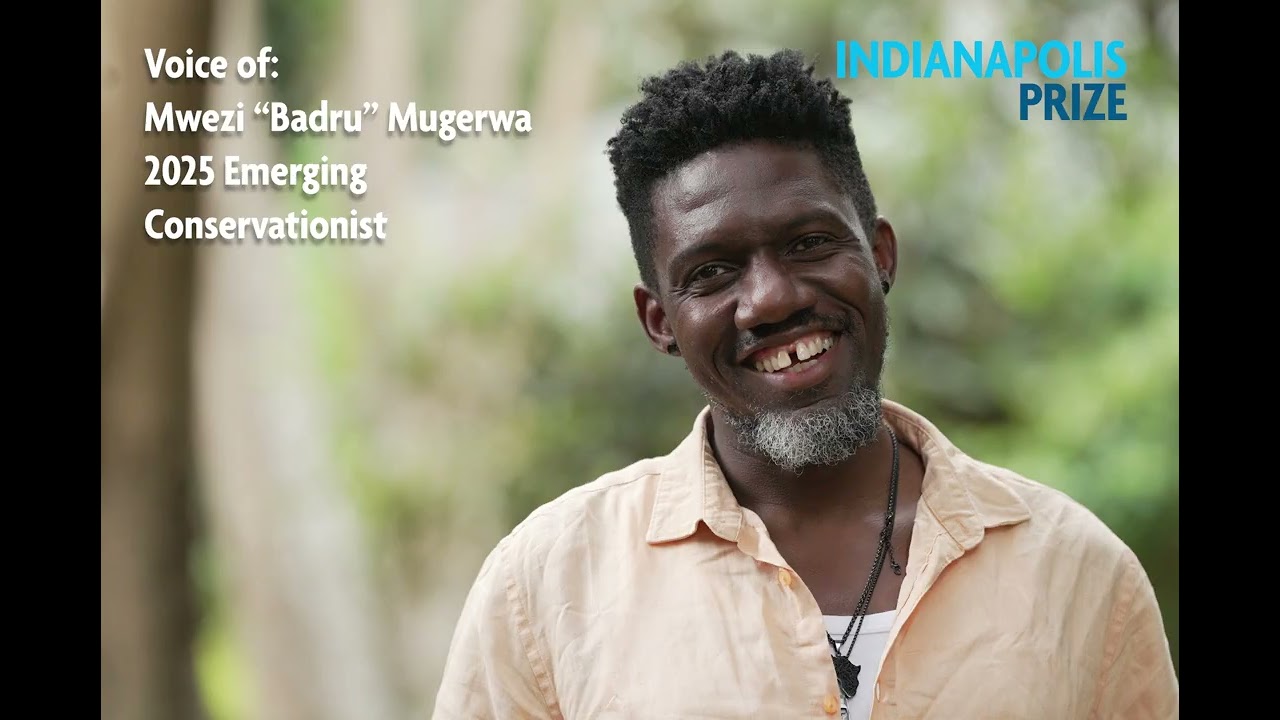
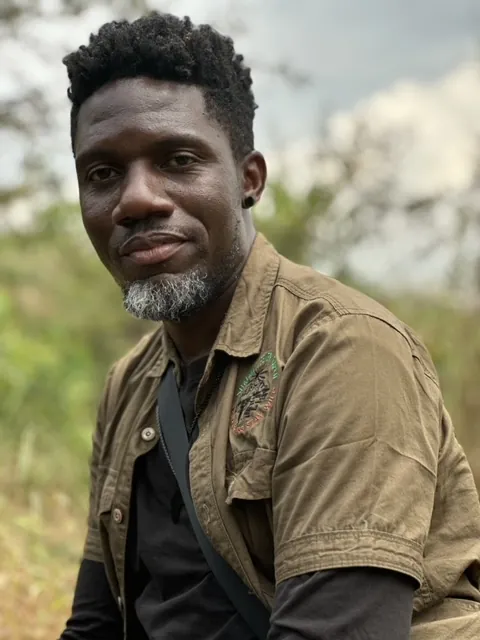 Mwezi “Badru” Mugerwa has traveled extensively across Africa in the past year, finding success and growth at every turn, with many communities eager to support his efforts to protect the African golden cat.
The 2025 Indianapolis Prize Emerging Conservationist welcomes every new prospect that comes his way, knowing that each opportunity helps him to share the plight of the African golden cat, his muse to which he has dedicated a lifetime of field conservation work.
“The last year has been great. I’m still enjoying the benefits of this crown,” he said of the Emerging Conservationist title. The award is presented every other year by the Indianapolis Zoo to a field conservationist under the age of 40 who illustrates substantial progress toward saving a species or group of species. Mugerwa is the second recipient of the award.
Mugerwa is renowned for his commitment to learning, tracking and protecting the elusive African golden cat (Caracal aurata). His group Embaka (a Ugandan term for the species) partners with local communities across equatorial Africa to educate them against poaching, teach ways to sustain themselves and think differently about living in harmony in the habitat. The goal is to keep the African golden cat free from snares and out of regional bushmeat markets.
“This is something that has happened, and it has gone really well. Since the Prize, we have been able to extend our project areas,” he said.
He began tracking the golden cat in his home of Uganda using camera-trap technology. Today, that effort has grown to multiple areas in Uganda, Cameroon, Tanzania, Kenya, Sierra Leone, South Sudan and Gabon. In the past nine months, Mugerwa has established camera grids at 32 sites across these countries (up from 24). The results have been phenomenal, with sightings of the African golden cat being recorded for the first time in years in some of these countries.
In July, the IUCN Red List listed the African golden cat as Vulnerable.
But Embaka goes beyond just education; it also offers wraparound services to the communities within the cat’s ecosystem.
The program supports 1,600 small livestock farms with the potential to grow even more. Embaka provides an adult female pig to help farmers breed a protein source, thereby lessening the need to hunt for other animals. The family must commit to doing the same for a neighbor after the pig breeds.
Nearly 13,000 local families have participated in his education and conservation programming. More than 2,000 people have participated in a savings and loan program. The Smile for Conservation program has provided dental care to more than 1,000 community members since 2025.
All the while, Mugerwa remains committed to inspiring the next generation of conservationists. He serves as a mentor to conservation students, including seven pursuing a master’s degree as well as a National Geographic Fulbright Scholar. The National Geographic program mobilizes global communities and creates a mutual understanding to build a more peaceful world.
“I’m very proud of all this expansion and of the community conservation work, both in terms of the number of local families involved but also in the number of areas where we know the African golden cat is present,” he said.
“Badru represents exactly who the Emerging Conservationist award was created to honor,” said Jake Oakman, senior vice president of External Relations at the Indianapolis Zoo.
“He embodies the next generation of global conservationists and is an exceptional ambassador for the program. Through his commitment to communities and his relentless focus on protecting a species needs a champion, Badru shows young conservationists across Africa and around the world what meaningful, sustained impact looks like.”
Listen to Mugerwa and Indianapolis Zoo Director of Communications and PR David Hosick talk about the impact of expanding the camera trap grid program across seven countries.
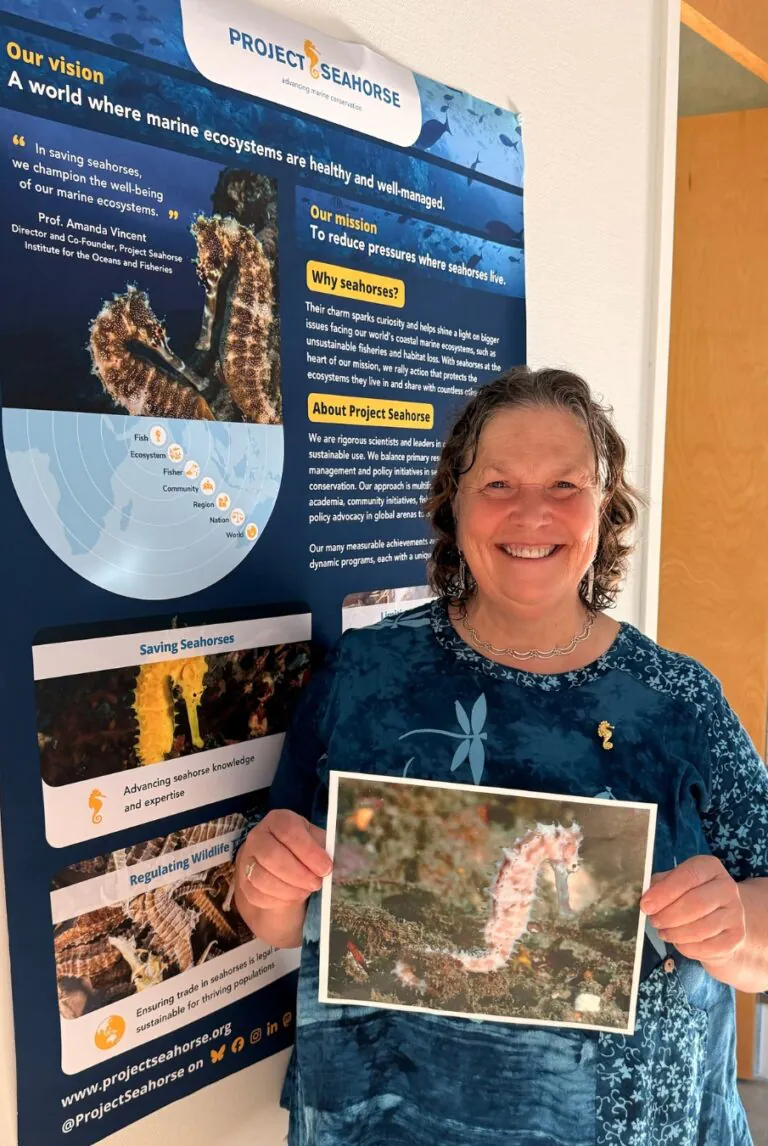
Marine biologist Amanda Vincent, Ph.D., has made seahorse conservation her career passion. Now, an international team of scientists has given Vincent a special honor by naminga newly discovered seahorse species in the Indian Ocean after her.
Hippocampus amandavincentae
The seahorse measures about 16cm long, has a short snout, five spines forming a crown on the top of its head and more spines along its body and tail.
Scientists have seen this fish before, but new research showed it is a distinct species. Its range is thought to extend across the Indian Ocean, from Mozambique to the Red Sea to India, according to Project Seahorse.
“It’s amazing that such a wonderful creature was hiding in plain sight. I surveyed the array of fishes dragged up by trawlers in Tuticorin, India, where this new species was first found, and missed it completely. Now, I have yet another special reason to push hard at ending bottom trawl fishing,” Vincent said.
Bottom trawl fishing drags heavy nets across the seafloor, collecting sea life and habitats in its path. It is a threat to more than 3,000 marine fish species caught in nets, according to Project Seahorse.
The Indianapolis Zoo’s Global Center for Species Survival Marine Conservation Coordinator Coralie Palmer teamed up with Project Seahorse to present a scientific poster at the One Ocean Science Congress of the Third United Nations Ocean Conference last year. According to the presentation, bottom trawling may only obtain one or two seahorses per night, but trawl effort is so intense that some countries catch millions of seahorses each year.
Project Seahorse also received grant funding from the Indianapolis Zoo to create the first comprehensive study of seahorse populations, habitats and human use across the Yucatán Peninsula, which will help inform future national conservation planning.
Zoological Society of London
For more than 30 years, the Zoological Society of London (ZSL) has been caring for three rare species of Mexican pupfish. These species were once found in Nuevo León in northeastern Mexico, but due to a variety of reasons, the springs they called home dried up, meaning the pupfish are listed as Extinct in the wild, according to the IUCN Red List of Threatened Species. Now, with help from the Indianapolis Zoo’s Global Center for Species Survival, ZSL and a group of partners are making progress on a massive undertaking – bringing the pupfish back to Mexico and back into the wild.
“These tiny pupfish were once found in small springs in Mexico, and now is the time to bring them back home. They act as an example of our mission to safeguard species on the brink of extinction and safeguard biodiversity for the future,” said ZSL’s Curator of Fish Alex Cliffe.
This year, ZSL, the Indianapolis Zoo and other partners traveled to Mexico to meet with local communities and hold workshops to start discussions about how to make this move happen. The workshops, funded by a grant from the Indianapolis Zoo, were met with excitement.
“Exceeded our expectations,” Cliffe said. “Many local community members remember the pupfish when they were in the wild. So many people in the communities are engaged, from local farmers, schools and local mayors.”
“It was amazing to see the places where these pupfish used to live and see the enthusiastic response of the local communities to welcome these fish back. The three workshops, one held in each community that these pupfish once called their home, has provided a detailed roadmap of how to make their return happen in practice,” said Monni Böhm, freshwater conservation coordinator with the Global Center.
Böhm started working with the ZSL pupfish team around two years ago when they first put in a proposal for the Indianapolis Zoo Saving Species Challenge. Starting with introductions to colleagues in Mexico, the collaboration has since grown. What was then only a spark of a plan has now developed into a fully-fledged road map to make this reintroduction a reality.
Now the team is focusing on the logistics of transporting the pupfish back to Mexico, first to a controlled aquarium system in Mexico, all while training local specialists as well as community members on how to care for the fish.
A long-term plan includes building natural ponds near where the springs once occurred. Every challenge was met with solutions by local community members, from where to place the ponds to where to find the water.
“It seems to be suddenly falling into place so quickly,” said Böhm.
Throughout the entire process, ZSL will provide continued expertise for the local communities and care for a population of the species at ZSL’s Whipsnade Zoo.
“This is a long-term commitment from all project partners and local communities. We will be acting as support where necessary with a clear plan of monitoring and reporting. This is part of the outputs from the workshops to provide the correct training to community stewards and to provide a legacy for the next generation to follow,” Cliffe explained.
Böhm hopes the efforts from this team will create a clear pathway about how other fish populations that are kept by zoos and aquariums can be brought back to their native environments.
“For me, it’s the potential for telling positive stories of what’s actually possible if you just put the funds in, put your heads together and work collaboratively and with communities to make this happen,” said Böhm. “It’s really important to the communities, but also it’s important in a global context to show pathways to conservation successes.”
“The kind donation from Indianapolis Zoo has been a real pivotal point in the project. The funds allowed Mexican and international partners to facilitate structured decision-making workshops with each of the three communities where the pupfish were once found,” Cliffe said. “It was crucial to listen and engage with the communities to formalize a way forward with their ideas, experience and knowledge and ultimately act as stewards of the pupfish and their habitats. The outputs from the workshops are now driving forward clearer plans and direction for each of the species, with the communities at the heart of the project.”
Video provided by Zoological Society of London
Preserving a Prehistoric Species in Indiana
In a small, climate-controlled area in the Global Center for Species Survival at the Indianapolis Zoo, a species on the brink of survival in Indiana clings to a vital lifeline.
Each bubble of air and hum of flowing water nurses a clutch of hellbenders to life, to one day be released into the Indiana waterways where they once thrived. Agricultural and industrial pollution, along with the damming of rivers, contributed to the eastern hellbenders (cryptobranchus alleganiensis) decline beginning in the mid-1900s, with the only known Indiana habitats today existing in three counties along the Blue River basin.
“This project allows the Indianapolis Zoo to directly contribute to increasing the hellbender population in our local rivers,” said Lewis Single, a curator at the Indianapolis Zoo. “We have the spaces, resources and expertise to give young hellbenders a head start, keeping them safe during the most vulnerable life stages, and releasing them when they are more likely to survive, thrive and eventually reproduce naturally.”
Also referred to as snot otter, water dog, devil dog, Allegheny alligator, water eel, hellbenders are North America’s largest salamander. Populations are declining in areas from Missouri east to New York. The IUCN Red List currently lists the hellbender as Vulnerable. The species is widely recognized as an indicator of environmental health in their ecosystems.
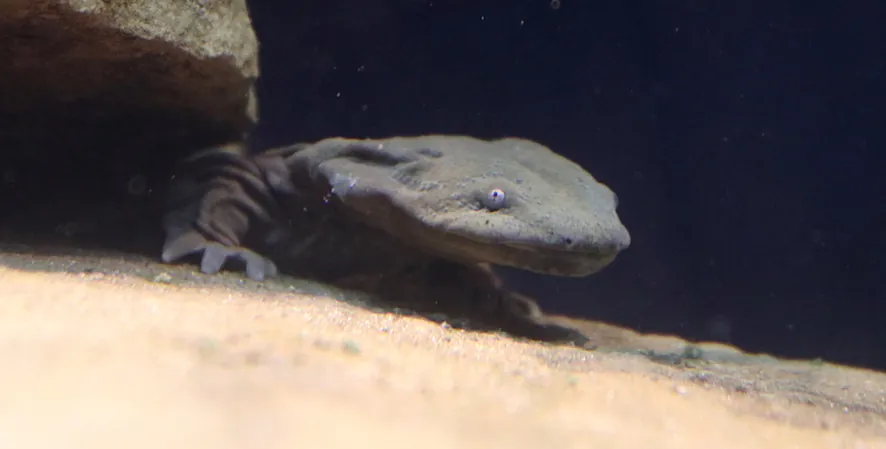
Since 2018, the Indianapolis Zoo has contributed to the Help the Hellbender (www.helpthehellbender.org) research program, a consortium of organizations (zoos, state agencies, universities and non-profits) committed to saving the species. The local effort is coordinated by researchers and biologists at Purdue University.
The Zoo currently has more than 200 hellbenders of various sizes that it has been raising for several years in a controlled environment. In 2024, 207 hellbenders reared at the Zoo were released, totaling more than 1,200 raised at various Indiana locations and reintroduced in the Blue River. Another release is planned for 2027.
“We are helping to increase the total number of hellbenders in Indiana, but this project also builds partnerships and awareness,” Single said. “That means locals who have never heard of hellbenders may change their agricultural practices to prioritize river health. They can feel great knowing their local zoo is putting its resources toward ambitious projects that will benefit Hoosiers for generations to come.”
Hellbenders and their ancestral cousins have existed for 65 million years. They typically lay nests in crevices or rocks and riverbeds, with each nest holding 300 eggs. The eggs are incredibly fragile and susceptible to sedimentation of the rivers, removal of rocks, water quality and temperature.
Partnerships through the program not only have helped with raising new hellbenders, but it also has helped to educate the community and encourage farmers to practice safer agricultural processes to retain topsoil.
The hellbender is a flagship for freshwater conservation in Indiana,” said Nico de Bruyn, Ph.D., vice president of Conservation and Education at the Indianapolis Zoo. “Through this program, the Zoo is translating its conservation expertise into measurable recovery efforts in the wild while building momentum for broader freshwater initiatives. Protecting species like hellbenders ultimately means protecting the clean water on which both wildlife and people depend.”
Threats to the Hellbender
- Sedimentation: Run-off sediment from agricultural areas
- Loss of riparian forest cover/increased water temperatures
- Gravel mining: Removing instream gravel and cobble stones
- Disease, contaminants and pet trade
How You Can Help
- Leave rocks alone: Do not move large flat rocks in streams while fishing or doing other recreational activities
- Handle with care: If caught, cut the line close to the hook and release it gently. Hellbenders are not venomous
- Reduce pollution
- Plant buffer zones between agricultural areas and rivers/streams
- Join local groups to learn more about the local environment
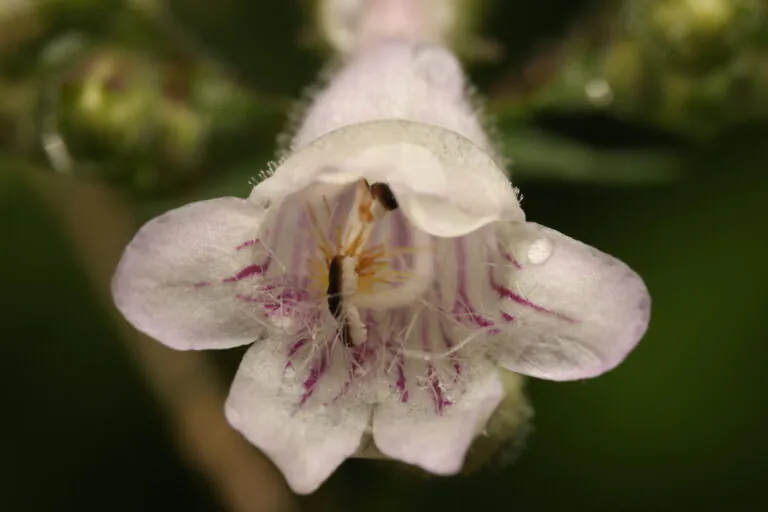
The Indianapolis Zoo is one of a few places in the world where you can see the Deam’s penstemon – the only plant species found exclusively in Indiana. Long ago, it bloomed in forests across the Hoosier state, but today it rarely is found outside of remote, undisturbed areas in the state. One reason why numbers are down for the Deam’s penstemon is because little information is known about the plant.
“We don’t know what the primary pollinators are. Some genetic analysis in and across populations indicates there are short-range pollinators working within clusters of genetically related penstemon, and long-range pollinators are visiting multiple clusters of more diverse penstemon,” explained Horticulture Technician Joseph Attaway. Long-range pollinators are important because they help maintain genetic viability within the population and reduce the risk of a sharp drop in population size.
The Zoo is working closely with several organizations to better understand the plant, including Purdue University’s Engineering Projects in Community Service ( EPICS)’s team, which created an open-source insect surveillance camera called the Moth Box. If the team can determine which pollinators are visiting the Deam’s penstemon, it could lead to other important discoveries about the plant itself. The more information is known, the more that can be done to conserve the species.
Photo by Joseph Attaway
Want to continue learning about Indianapolis Zoo conservation initiatives?