
Conserving Spring Ecosystems
Global Springs Alliance launches at Lake Tahoe to advance conservation of the world’s extraordinary spring ecosystems
The Indianapolis Zoo participates in global effort to protect springs and spring-dependent species around the world
Springs are amongst the world’s smallest, most distinctive and most threatened freshwater ecosystems. They occur in environments ranging from cold mountain seeps and desert oases to geothermal pools, limestone aquifers and extensive groundwater-fed wetlands. They sustain species with exceptionally small ranges while supplying water for drinking, agriculture and livestock, feeding rivers and supporting recreation and tourism. Springs are often a principal water source for millions of people and their livestock. For many Indigenous peoples and local communities worldwide, springs also sustain sacred places, cultural practices and connections to ancestral lands.
Springs are also highly threatened. Groundwater extraction, water diversion, pollution, invasive species, land-use change and climate-related changes in water availability can alter or eliminate spring habitats. For species confined to a single spring, a local disturbance can become a global extinction. California’s Tecopa pupfish, a subspecies lost following alteration of its hot-spring habitat, offers a stark example of the consequences.
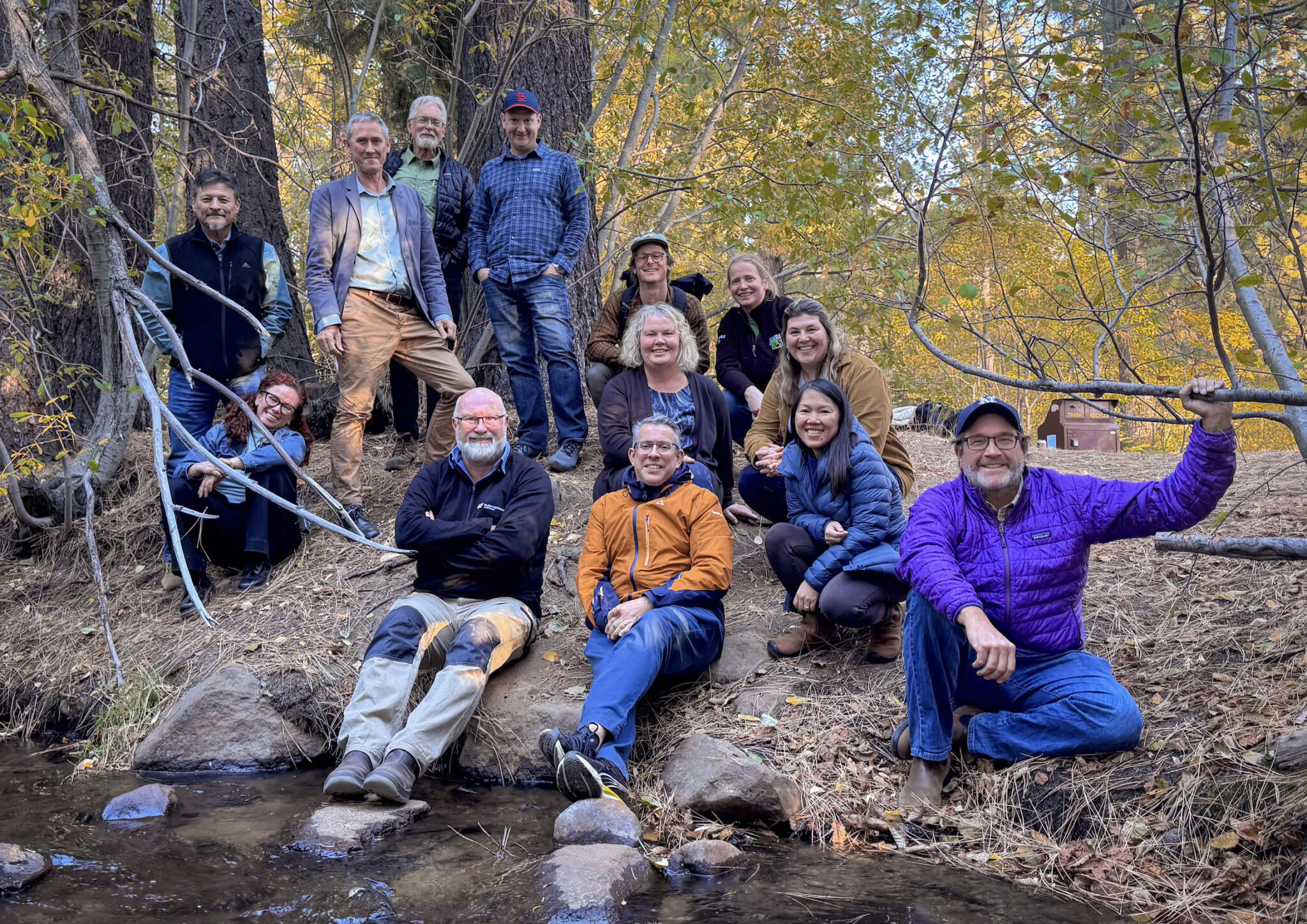
Scientists, conservationists and policy specialists from around the world convened at the University of Nevada, Reno’s Lake Tahoe campus from Oct. 14–16 to launch the Global Springs Alliance and establish a road map for protecting these threatened ecosystems. Organizers included the University of Nevada, Reno, the IUCN Species Survival Commission Freshwater Conservation Committee (which is supported by our Global Center for Species Survival Freshwater Conservation Coordinator Monni Böhm), Saint Louis Zoo, Springs Stewardship Institute, SHOAL and Re:wild.
The Lake Tahoe workshop builds on an IUCN Resolution on springs that was adopted at the IUCN’s 2025 World Conservation Congress in Abu Dhabi. Over the course of three days, participants of the Lake Tahoe workshop also advanced planning for an IUCN Inter-Commission Task Force on springs. This means that the task force is convened between three IUCN Commissions: the Species Survival Commission (SSC), the World Commission on Protected Areas (WCPA) and the Commission on Ecosystem Management (CEM).
The Indianapolis Zoo is excited to support the work of the Global Springs Alliance. This Alliance will connect existing expertise and datasets with government agencies and local partners and focus on the identification of irreplaceable springs; assessment of springs species and ecosystems; securing recognition for priority sites under existing frameworks and policy conventions; and turning this recognition into effective protection.
The Indianapolis Zoo and springs conservation
Springs conservation is an ongoing effort at the Indianapolis Zoo. Earlier this year, the Zoo hosted an IUCN Red List assessment workshop for North American freshwater molluscs, which included extinction risk assessments for around 180 spring snail species. These assessments will be published later this year on the IUCN Red List of Threatened Species. Given that many spring snail species only occur in a single or very few spring water sources, they generally have highly restricted ranges and are at risk of extinction due to a multitude of pressures affecting these ecosystems, especially groundwater abstraction, diversion and climate change.
The Indianapolis Zoo also supports a project to return three casualties of spring habitat loss back to the wild. Three species of Extinct in the Wild pupfish from Nuevo León, Mexico, are currently kept alive in zoos, but actions are underway to return these species to their Mexican homelands. Earlier this year, Böhm traveled to Nuevo León to join local communities and collaborators from the Zoological Society of London, Universidad Autónoma del Estado de Morelos, Universidad Michoacana de San Nicolás de Hidalgo, Universidad Autónoma de Nuevo León, Instituto Mexicano de Tecnología del Agua (IMTA) and the San Antonio Zoo to establish workplans for the return of these species. The three community workshops were supported by an Indianapolis Zoo Field Conservation Grant.
Keep up-to-date with the work of the Global Springs Alliance
The Global Springs Alliance connects organizations and people working to protect, restore and sustainably steward springs and spring-dependent species worldwide. It supports collaboration, access to expertise and tools, and the application of knowledge to conservation policy and practice. Learn more at globalspringsalliance.org and follow its work on LinkedIn and Instagram.
By Monika Böhm, Ph.D., Freshwater Conservation Coordinator at the Global Center for Species Survival
Published October 28, 2026