
Indianapolis Zoo Hosts Global Freshwater Mollusc Workshop
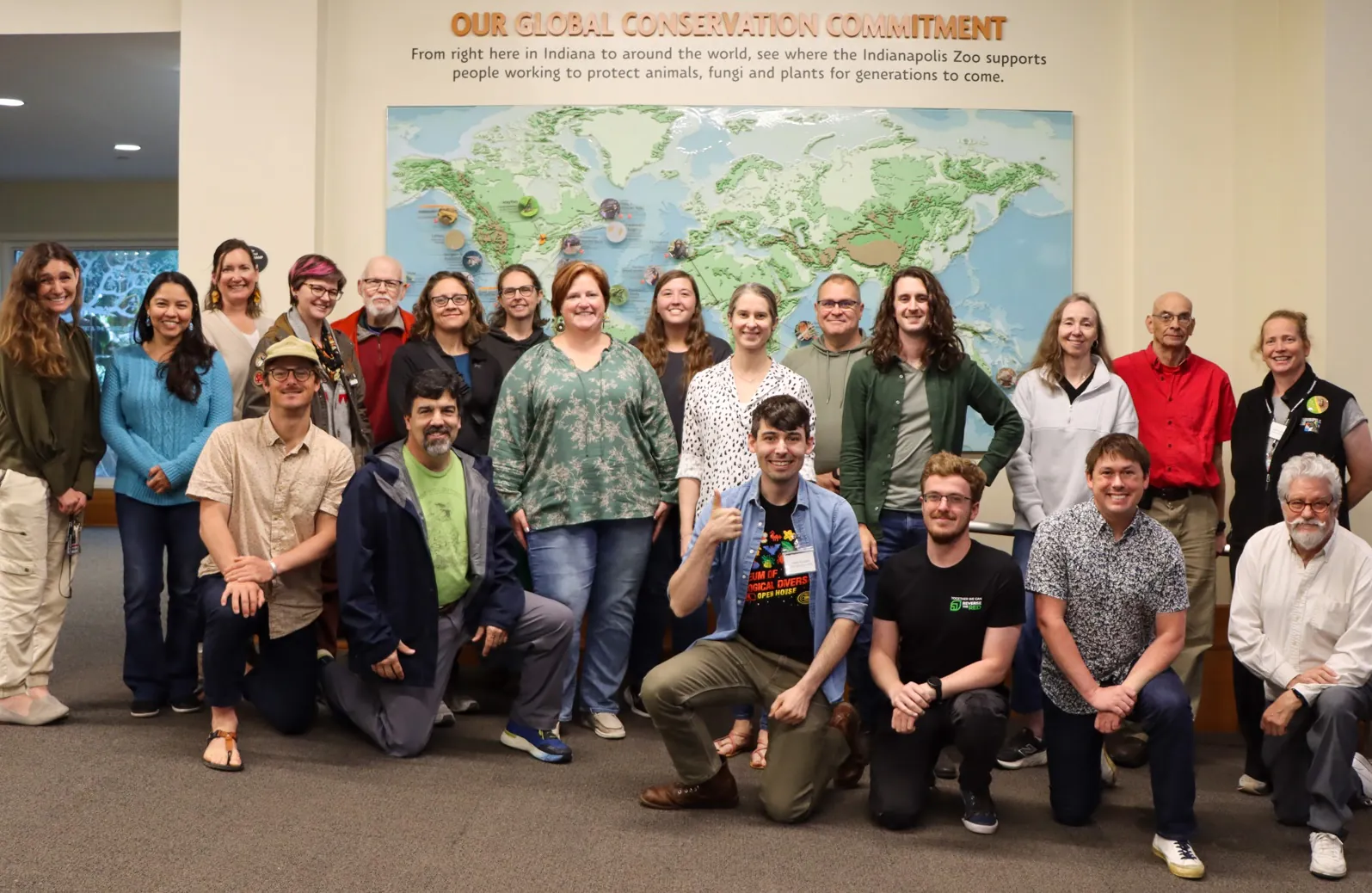
In May, the Indianapolis Zoo hosted an International Union for Conservation of Nature (IUCN) Red List assessment workshop. This workshop was part of the IUCN’s Global Freshwater Mollusc assessment, spearheaded by the IUCN Biodiversity Assessment and Knowledge Team in collaboration with the IUCN SSC Mollusc Specialist Group. This workshop was one of several such events going on around the world to complete the first ever comprehensive assessment of the status of freshwater molluscs. The mollusc assessment follows in the wake of the recently completed first Global Freshwater Fauna Assessment covering fishes, crabs, crayfish, shrimp, dragonflies and damselflies.
The IUCN Red List of Threatened Species is the world’s leading source for the extinction risk of species and serves as an indicator of the health of the world’s biodiversity. Far more than a list of species and their extinction risk status, it informs and catalyzes action for biodiversity conservation and policy change, critical to protecting our natural world.
Why the Indianapolis Zoo?
Freshwater conservation coordinator Dr. Monni Böhm co-leads the Association of Zoos and Aquariums (AZA) SAFE program for North American Freshwater Mussels. SAFE stands for Saving Animals From Extinction and galvanizes the collective expertise within AZA-accredited zoos and aquariums and their massive audiences to save species worldwide. As part of the recently launched first action plan for AZA SAFE North American Freshwater Mussel, the program leads the assessment of the North American freshwater mussels and received generous funding from IUCN to host the workshop for all North American freshwater molluscs under assessment. Additionally, as host for the Global Center for Species Survival, and in partnership with the Center for Species Survival: New Mexico at Albuquerque BioPark and the Center for Species Survival: Freshwater at Shedd Aquarium, all partners in the SAFE program and with memberships in the IUCN SSC Mollusc Specialist Group, the assembled team was in a prime position to host and support this workshop.
Those who attended the workshop came from all over the country. Apart from the representatives of the aforementioned IUCN SSC Centers for Species Survival, the Zoo hosted experts from the IUCN SSC Mollusc Specialist Group, the AZA SAFE North American Freshwater Mussel program, the Freshwater Mollusk Conservation Society, the Springs Stewardship Institute, NatureServe and various academic institutions. There were also some students in attendance from Butler University who helped with drafting assessments as part of their coursework, in a collaboration with Dr. Hilary Madinger at Butler University.
The goal of the workshop was to assess around 562 species of North American freshwater mussel and freshwater gastropod. These species had either not yet been assessed for the IUCN Red List, or they had vastly outdated assessments that needed an update to current IUCN Red List standards.
Successful Workshop Reinforces The Threat to Survival
Overall, the workshop was a great success. The group was able to assess at least 365 of the 562 species during their time at the Indianapolis Zoo, many of them in threatened categories! In addition, the workshop was attended by collaborators and friends from the Bureau of Water Quality’s (BWQ) White River Freshwater Mussel Propagation Facility, the mussel propagation facility co-funded by the Indianapolis Zoo. Attendees took a break from all the assessment work with a field trip to visit the facility (see video below).
Unfortunately, freshwater conservation coordinator Monni Böhm believes the road ahead is going to be a rocky one for North America’s freshwater molluscs. “The threat to these species is extremely high. For example, I spent the week with experts on spring snails, highly range restricted species, often found in single spring sites. In many parts of the country, these habitats are drying up due to water abstraction for uses in agriculture and climate change and are trampled by livestock. Additionally, many mussel species have been reduced in population size to very small numbers through a barrage of threats from pollution, invasive species, damming/channelizing of waterways and more,” she said.
The Indianapolis Zoo is grateful to all the experts who attended the workshop and gave their expertise for these assessments. Although these results are very sobering, it is vital to produce these assessments, inform people about these species’ plight and ensure that conservation measures are taken to reduce the threats identified to these species.