
Freshwater Fungi
Indianapolis Zoo Grant Leads to Scientific Discovery
Two Indianapolis Zoo grant recipients and a team of Conservation Coordinators with the Global Center for Species Survival have discovered an entirely new kind of freshwater fungus, right here in Indiana.
Their findings appear in the June 2025 issue of the journal Persoonia, titled “Fungal Planet Description Sheets.”
Aquatic fungi are microscopic, unlike the brightly colored, capped mushrooms found in cartoons and fairy tales. However, they are still essential decomposers that recycle nutrients back into ecosystems. Life on Earth as we know it would not be possible without these unsung heroes of the natural world.
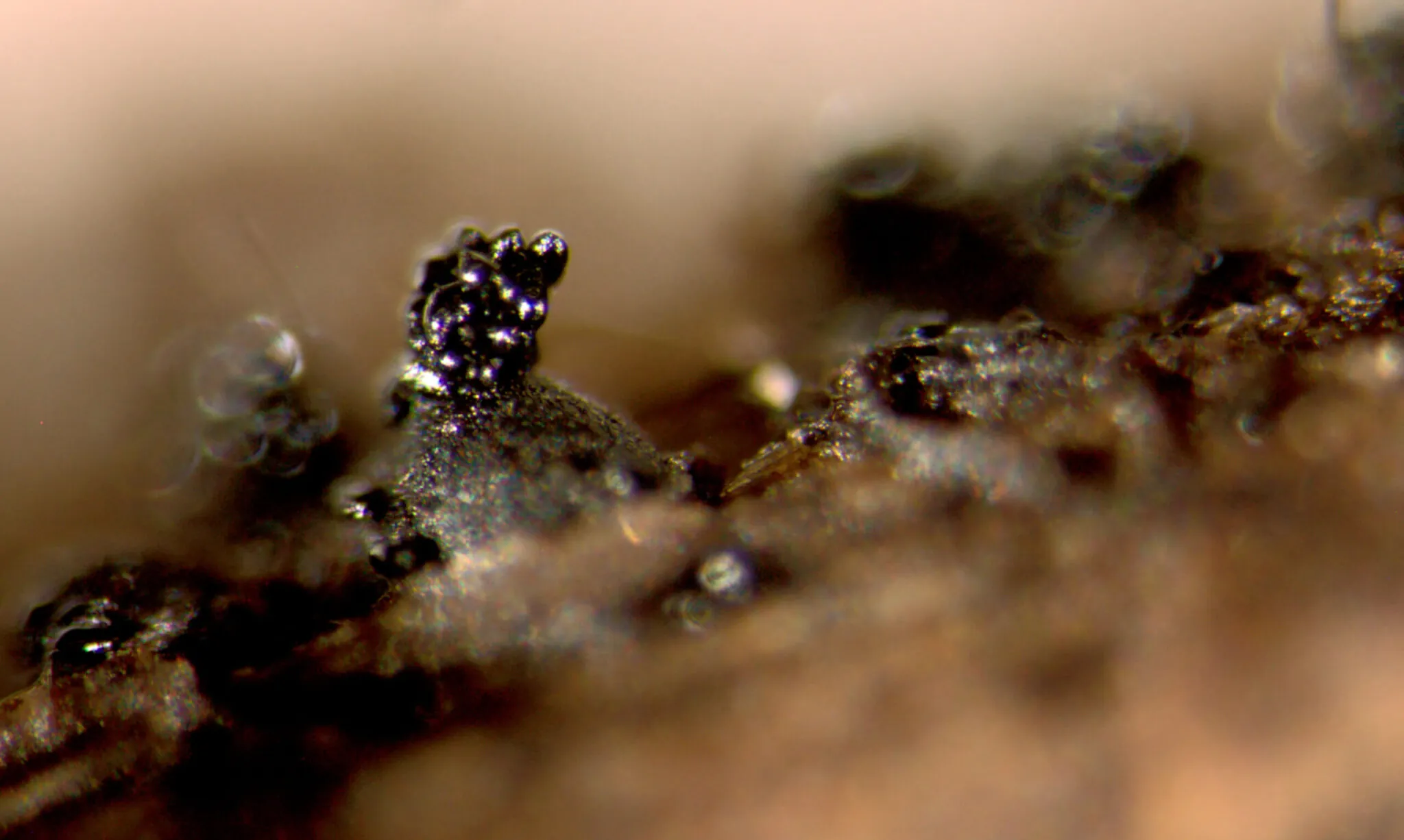
This is not only a story of discovery but also one of collaboration. Despite their importance, fungi are among the most understudied organisms. Only about 5-10% of an estimated 1.5 to 5.1 million species have been described by science. Now, thanks to at team of scientists and the Indianapolis Zoo, a newly described genus and species—Atromagnispora indianenis—has been identified.
“Discovering and naming new species helps us appreciate the amazing living world around us,” said Dr. Luke Jacobus, a scientist involved in the study.
In 2022, Global Center Freshwater Conservation Coordinator, Dr. Monika Böhm, contacted Dr. Huzefa Raja, a mycologist at the University of North Carolina at Greensboro, and an idea was born to improve the understanding and conservation of aquatic fungi. Raja connected Böhm with aquatic fungi researchers in Europe, and a collaborative network mushroomed, leading to the creation of the IUCN SSC Aquatic Fungi Specialist Group. Meanwhile, back in the United States, Raja received a research grant from the Zoo to search for new species of freshwater fungi in Indiana. At the same time, Jacobus, another Indianapolis Zoo grant recipient, entomologist and professor at Indiana University Columbus, was searching the waterways of Indiana for “lost species” of mayflies. With both men spending a lot of time wading through Indiana rivers and lakes, it made sense for them to work collectively.
“Science is a collaborative endeavor. The discovery of the new genus is a testament to the spirit of collaboration,” Raja said. He and Jacobus study entirely different kinds of organisms, but they operate in the same ecosystems. Due to their connection with the
Global Center’s team of experts, Raja and Jacobus connected and found value in working together, pooling limited resources to maximize results.
Jacobus, as well as former Global Center Invertebrate Conservation Coordinator, Dr. Sérgio Henriques, agreed to help double Raja’s ability to collect samples of submerged decaying wood found in Indiana waterways. One of these samples produced exciting results—a new genus and species of ascomycete fungus from the family Lindgomycetaceae. Ascomycete fungi include morel mushrooms and are the most species rich group of fungi! Atromagnispora indianensis is the scientific name of the new species. In Latin, “atrum” means “dark” and “magnus” means large, referring to the dark and large ascospores of the fungus. “Indianensis” is a tribute to the state of Indiana where the fungus was found.
The new discovery was made in the East Fork of the White River at Hindostan Falls. This unique site has a curious history of its own. First settled in 1818, Hindostan became the county seat of Martin County and was set to become a major city in Indiana. But in 1828, a “great sickness,” possibly cholera or yellow fever, caused most of its residents to die or flee. The town was never occupied again. Today, Hindostan Falls is a place of natural beauty, open to the public and preserved by the Indiana Department of Natural Resources. It is also home to a high degree of freshwater biodiversity.
So why is this fungal discovery important? Freshwater biodiversity is rich and in danger—the extinction risk for freshwater species is 3-4 times higher than that of terrestrial species. Freshwater fungi specifically are vital to the health of our waterways; evidence exists that they clean our water of human-introduced chemicals and compounds. Plus, fungi hold great promise for the medical community. Antibiotics that cure bacterial infections, statins that reduce high blood pressure and immunosuppressants that improve the success of organ transplants all have been derived from fungi. So, when a new fungus is discovered, studying the compounds it produces could lead to new life-saving medicines.
By investing in such discoveries, the Indianapolis Zoo embodies its mission to protect nature and inspire people to care for our world. All species have value, including the ones not yet known! Caring for animals and plants at the Zoo helps researchers to better understand their wild counterparts. And with the support of visitors and donors, scientific breakthroughs are possible.
This blog was a collaboration between experts at the Global Center for Species Survival, including Freshwater Conservation Coordinator Dr. Monika Böhm, Fungus Conservation Coordinator Jeffery Stallman and Dr. Huzefa Raja, mycologist at University of North Carolina at Greensboro. We’re also grateful to the IUCN SSC Aquatic Fungi Specialist Group for their contributions.
Published September 25, 2025