
Regional Species Conservation
Roles and Threats
Our planet now faces a global extinction crisis never witnessed by humankind. Scientists predict that more than 1 million species are on track for extinction in the coming decades. Our planet is losing species at an unprecedented rate, tens to hundreds of times faster than the historical average. Due to habitat loss, overexploitation, climate change, pollution and invasive species, scientists predict that more than 1 million species are at risk of extinction, some as soon as in the coming decades. As they vanish, so do the ecosystems that sustain our food, clean water and economies. In 2022, 196 nations responded with the Kunming-Montreal Global Biodiversity Framework, a bold commitment to halt and reverse nature loss and set biodiversity on the path to recovery for people and planet.
The IUCN Species Survival Commission (SSC) is turning that global ambition into action through National Species Specialist Groups (NSSGs). Uniquely positioned to bridge SSC’s global strategies with on-the-ground action at the national level, NSSGs apply IUCN processes and knowledge products where conservation happens, delivering the greatest impact for species. Working in native languages, conservation scientists, practitioners, community members and government officers join forces to empower emerging local talent and shape National Biodiversity Strategies and Action Plans, driving the recovery of endemic, near-endemic and often overlooked species.
Based at the Global Center for Species Survival, the National Species Conservation Coordinator works with the IUCN SSC National Species Conservation Committee to support all NSSGs with national species assessments, conservation planning, partnerships, network capacity building, and communications.
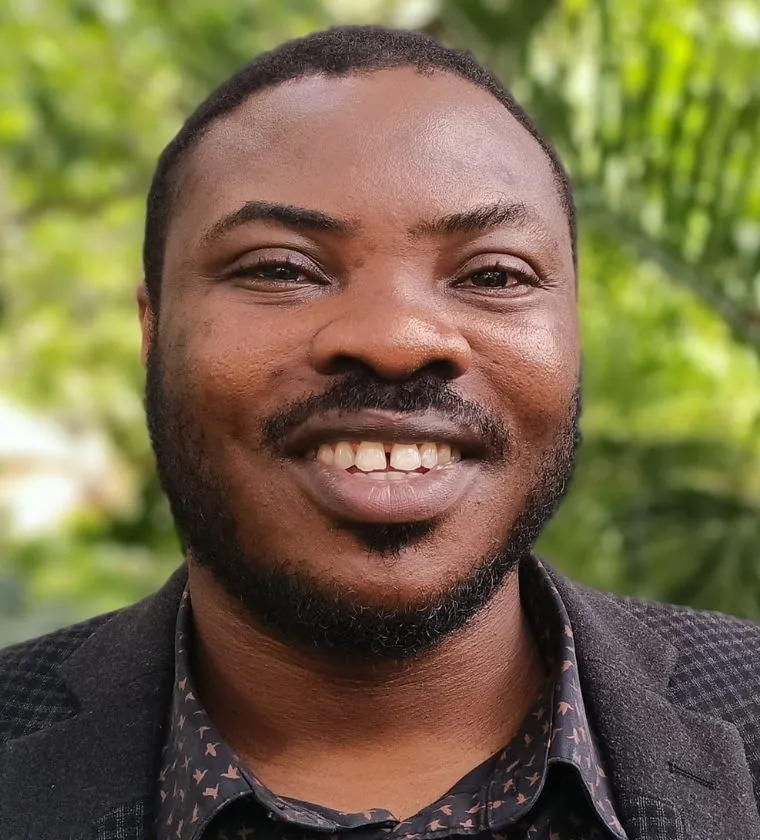
Samuel Ivande, Ph.D.
Dr Sam Ivande is the National Species Conservation Coordinator at the Indianapolis Zoo’s Global Center for Species Survival, supporting the IUCN SSC’s National Species Specialist Groups (NSSGs) worldwide. With a background in Afro-Palearctic bird migration research and conservation, Sam has collaborated with partners across continents. Through his previous role as a Research and Teaching Director at the foremost ornithology and conservation training institute in Western Africa – A.P. Leventis Ornithological Research Institute (APLORI), he helped build conservation capacity in the region. He helped establish and manage the Nigerian Bird Atlas Project – one of the region’s largest citizen science programs and led a GBIF-funded African Bird Atlas Project with partners across west, east and southern Africa. He is an advocate for citizen science and local community participation in biodiversity conservation and is committed to strengthening and growing the NSSG network globally